

How Can You Prove a Brain Injury After a Car Accident in Mississippi?
A normal CT or MRI does not rule out a brain injury, so proof usually comes from combining several kinds of evidence rather than a single scan. Medical records, neuropsychological testing, treating-doctor opinions, and testimony from people who know you all work together to show the injury is real.
- Emergency room and follow-up medical records
- Neuropsychological (cognitive) testing
- Advanced imaging such as DTI or fMRI, where available
- Your treating physician's opinion on the cause
- Before-and-after accounts from family, employers, and teachers
No single item usually carries a claim; the strength comes from how these pieces fit together.
Learning how to prove a traumatic brain injury claim can feel discouraging when a scan comes back normal and an insurer treats the injury as if it never happened. At Richard Schwartz & Associates, our Mississippi brain injury attorneys know these injuries are often real even when a single test looks clean.
We have helped injured people across Mississippi for more than 40 years, and we understand how a brain injury can quietly change a person's work, relationships, and daily life. A Jackson traumatic brain injury lawyer on our team can review your records and explain how the proof is built.
This guide explains why a normal scan is not the last word, and walks through the evidence that tends to carry the most weight.
Key Takeaways about Proving a Concussion After a Car Accident in Mississippi
- A normal CT or MRI does not rule out a traumatic brain injury, especially a mild one.
- Proof usually comes from a combination of medical records, testing, and testimony.
- Neuropsychological testing and advanced imaging can reveal problems that standard scans miss.
- Insurers commonly raise gaps in treatment, pre-existing conditions, and social media to challenge these claims.
- Mississippi generally gives injured people three years to file, under a pure comparative negligence system.
Why Doesn't a Normal Scan Rule Out a Brain Injury?
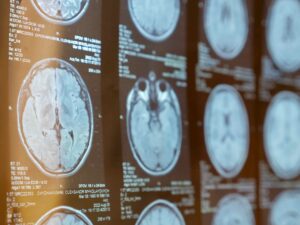
A normal scan does not rule out a brain injury because the most common crash-related injury, a concussion or mild traumatic brain injury, often involves microscopic damage that standard CT and MRI scans are not designed to show. The injury can be very real even when the pictures look normal.
Standard scans are very good at finding bleeding and skull fractures, but a mild brain injury frequently involves stretching and tearing of nerve fibers too small to appear on them. That is why symptoms of a concussion can persist while the imaging report reads as clear.
Common symptoms include headaches, memory trouble, dizziness, and changes in mood or sleep. These effects can be life-altering even without a visible mark on a scan.
Because the injury does not show on a routine image, it is sometimes called an invisible injury. That label captures a hard truth for many clients: the harm is real, but it is easy for others to overlook.
How Do Mississippi Car Accidents Cause Brain Injuries?
Mississippi car accidents cause brain injuries through direct impact, rapid back-and-forth or rotational movement of the head, and in some cases, oxygen deprivation. The brain can be hurt even when the head never strikes anything.
A sudden stop can throw the brain against the inside of the skull, while rotational forces can stretch nerve fibers. In some crashes, oxygen deprivation brain injuries develop when breathing is interrupted after a serious wreck.
Understanding the mechanism of injury helps connect the harm to the collision, which is a key part of any claim.
Even a lower-speed crash can produce these forces, so a brain injury is not limited to dramatic wrecks. What matters is how the head and brain moved, not only how the vehicles looked afterward.
How Do You Prove a Traumatic Brain Injury Claim?

You prove a traumatic brain injury claim by layering several kinds of evidence, starting with medical records and building toward testing, imaging, and testimony. The sections below walk through that evidence roughly in order of weight.
No single document usually settles a brain injury claim. Instead, each piece supports the others, painting a consistent picture of how the injury happened and how it affects your life.
In our experience, that combined record is what answers an insurer's doubts and gives a jury a clear view of the injury.
Each type of evidence has its own strengths and limits, so we rarely rely on one alone. Weaving them together is what turns scattered symptoms into a clear account of the injury.
Emergency Room and Follow-Up Medical Records
Emergency room and follow-up records are the foundation of most brain injury claims, because they document symptoms close to the time of the crash. Early, consistent treatment notes carry real weight.
Records that note confusion, headaches, or memory problems soon after the wreck help tie the injury to the collision. Follow-up visits then show whether symptoms continue over time.
Consistent care creates the timeline that supports your claim and makes the injury harder to dismiss.
It helps to mention every symptom to your providers, even ones that feel minor or embarrassing. Small details in the early notes often become important later.
Neuropsychological Testing
Neuropsychological testing is often the strongest objective evidence of a mild brain injury. These structured tests measure memory, attention, and processing speed in a way a scan cannot.
A neuropsychologist uses standardized tests to compare your current abilities against expected performance. Because the testing follows established methods, it is hard to dismiss as guesswork.
The results can reveal deficits that never show up on imaging, which is why this testing is so valuable in these cases.
The testing usually takes several hours and covers many areas of thinking. That depth is part of what makes the results persuasive.
Advanced Imaging Like DTI and fMRI
Advanced imaging, such as diffusion tensor imaging, known as DTI, and functional MRI, known as fMRI, can sometimes show injury that standard scans miss. These tools look at how the brain is wired and how it works, not just its structure.
DTI maps the brain's nerve-fiber pathways and can reveal the kind of shearing injury common in mild brain injuries, an area of active study described by the National Institute of Neurological Disorders and Stroke. These methods are not available everywhere and are still developing.
For that reason, advanced imaging supports rather than replaces the rest of the record. When available, it can add powerful objective evidence.
Access to these scans can depend on where you live and which specialists are nearby. We help clients find qualified providers when this imaging may help their case.
Treating Physician Opinions
Your treating physician's opinion connects the dots between the crash and your symptoms. A doctor who has followed your recovery can speak to the cause and the lasting effects.
Because a treating doctor knows your history, an opinion on how the injury links to the wreck carries weight. That opinion is strongest when it lines up with the records and the testing.
We work with treating providers to make sure their conclusions are clearly documented and easy to follow.
A short note from a trusted doctor can carry more weight than a stack of technical records. Clarity often matters as much as volume.
Before-and-After Testimony From People Who Know You
Testimony from people who knew you before the crash can be some of the most convincing evidence of a brain injury. Family, coworkers, and teachers notice changes that tests may not capture.
A spouse may describe a shorter temper, an employer may note missed details at work, and a teacher may see a student struggling to focus. These everyday observations make an invisible injury concrete.
Combined with the medical proof, they help show the full effect of the injury on your daily life.
These witnesses do not need medical training to be believed. They simply describe the person they knew before the crash and the changes they have seen since.
How Do Insurance Companies Challenge Brain Injury Claims?
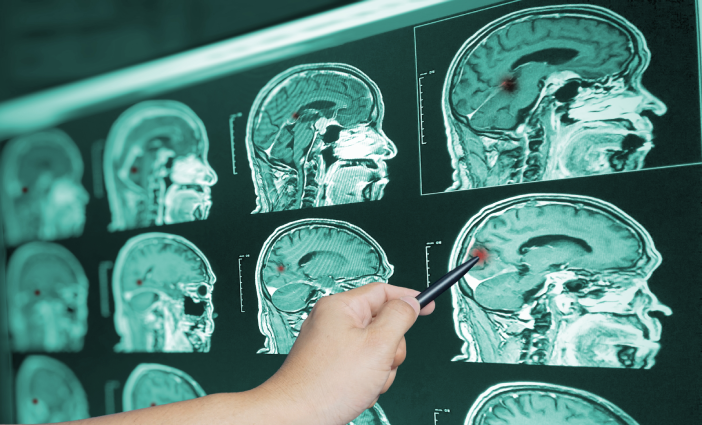
Insurance companies commonly challenge brain injury claims by pointing to gaps in treatment, raising a pre-existing condition, or using social media. Knowing these arguments in advance helps a strong record answer them.
A gap in treatment may be read as a sign the injury was minor, so steady medical care helps close that door. When a prior condition is raised, records that show how the crash worsened your health respond to it.
As for social media, everyday posts can be taken out of context, so caution online is wise while a claim is open. None of these arguments means a claim is weak; they are routine, and a well-documented record is the answer to each.
We prepare for these arguments from the start rather than reacting to them later. Anticipating the questions is how a claim stays on solid ground.
How Long Do You Have to File a Brain Injury Claim in Mississippi?
In Mississippi, you generally have three years from the date of the crash to file a brain injury claim, under Miss. Code Ann. § 15-1-49. The state also follows pure comparative negligence, so partial fault reduces but does not erase your recovery.
Because a brain injury can take time to reveal its full effect, it is easy to underestimate the deadline. Under Mississippi's comparative negligence rule, you can recover even if you were partly at fault, with your damages reduced by your share.
Acting well before the deadline gives your claim the time it needs to gather the medical proof described above.
Certain situations, such as claims involving a government vehicle, can shorten that window considerably. Confirming your specific deadline early is the safest course.
FAQs for How to Prove a Traumatic Brain Injury Claim
Here are answers to questions we often hear about proving these injuries.
Can you have a brain injury without losing consciousness?
Yes. Many people with a concussion never black out. Losing consciousness is not required for a real and lasting brain injury, and medical records can document the injury either way.
How soon after a crash do brain injury symptoms appear?
Symptoms can start right away or surface over the following days. A delay is common and does not mean the injury is minor. Seeing a doctor promptly, even for subtle changes, helps protect both your health and your claim.
What if my symptoms were blamed on stress or anxiety?
This happens often, because brain injury symptoms can overlap with stress. Thorough testing and a consistent medical record help show the difference, and a neuropsychological evaluation is one way to sort out the cause.
Does a mild traumatic brain injury still qualify for compensation?
It can. The word mild describes how the injury looked at first, not how much it affects your life. Persistent symptoms from a mild brain injury can support a claim.
What records help the most in a brain injury claim?
Early treatment notes, neuropsychological testing, and consistent follow-up records tend to carry the most weight. Statements from people who know you add important context, and keeping every appointment builds that record.
Speak With a Jackson Traumatic Brain Injury Lawyer

A brain injury you cannot see on a scan is still real, and you deserve to have it taken seriously. A Jackson traumatic brain injury lawyer at Richard Schwartz & Associates can help gather the medical proof, work with your doctors, and stand up to the insurance company. Our Mississippi car accident attorneys have fought for injured people across the state for more than 40 years.
We answer the phone 24 hours a day, and your consultation is free. Call (601) 800-5559. One call, that's all!