

Columbus car accident statistics and high-risk roads in Columbus, MS, tell a story most drivers here already feel in their gut every time they merge onto U.S. 45 during the afternoon rush. The data confirms that instinct, and it points to a handful of corridors where serious crashes keep happening. At Richard Schwartz & Associates Injury Lawyers, P.A., we have handled Mississippi injury cases for more than 40 years, and those same stretches of road show up in our files year after year.
Below, we walk through what verified state and federal crash data says about Mississippi roads, which Columbus corridors carry the most risk, and how state law treats fault after a wreck. We also share what our attorneys look for when the road itself, and not just a driver, played a role in the collision.
What Do Car Accident Statistics Reveal About High-Risk Roads in Columbus, MS?
Mississippi has the highest traffic death rate in the country, and in Columbus that risk concentrates where fast highway traffic runs into city traffic. The corridors carrying the heaviest loads, U.S. 45, U.S. 82, and Highway 182, are the same ones that produce the most severe collisions.
Key Takeaways about Mississippi Car Accident Statistics
- Mississippi had the highest motor vehicle death rate of any state in 2024, measured both per mile driven and per resident.
- Statewide traffic deaths rose from 703 in 2022 to 732 in 2023, while serious injuries dipped slightly over the same period.
- Columbus sits where U.S. 45 meets U.S. 82, a junction that combines freeway speeds, heavy freight, and local turning traffic.
- Older surface streets, including Highway 182, Main Street, and Alabama Street, produce frequent turning and rear-end conflicts.
- Mississippi follows a pure comparative negligence rule, so a partly at-fault driver may still recover reduced damages.
- Most Mississippi injury lawsuits carry a three-year filing deadline, and claims against government entities can involve shorter notice requirements.
How Do Mississippi Car Accident Statistics Compare to Other States?
Mississippi has the highest traffic fatality rate in the United States, and it holds that position no matter how the rate is measured. In 2024, the state recorded 1.81 deaths per 100 million miles traveled and 25.6 deaths per 100,000 residents, the worst figures in the nation on both counts, according to the Insurance Institute for Highway Safety analysis of federal crash data. Massachusetts, at the other end of the list, recorded 0.59 deaths per 100 million miles.
The federal picture matches. NHTSA state traffic data for 2023 put Mississippi at the top of the fatality rate table again, at 1.79 deaths per 100 million miles traveled, ahead of Arizona and South Carolina. That was the same year national traffic deaths began falling for the first time since the pandemic surge.
State numbers tell the same story from closer range. The Mississippi Office of Highway Safety reported that traffic fatalities climbed from 703 in 2022 to 732 in 2023. Serious traffic injuries moved the other direction, falling from 3,344 to 3,205 across the same year.
The practical meaning is hard to miss. A driver on a Mississippi road faces roughly triple the fatality risk of a driver in the safest states, and that gap has not meaningfully narrowed.
Car Accident Statistics That Shape Risk in Lowndes County
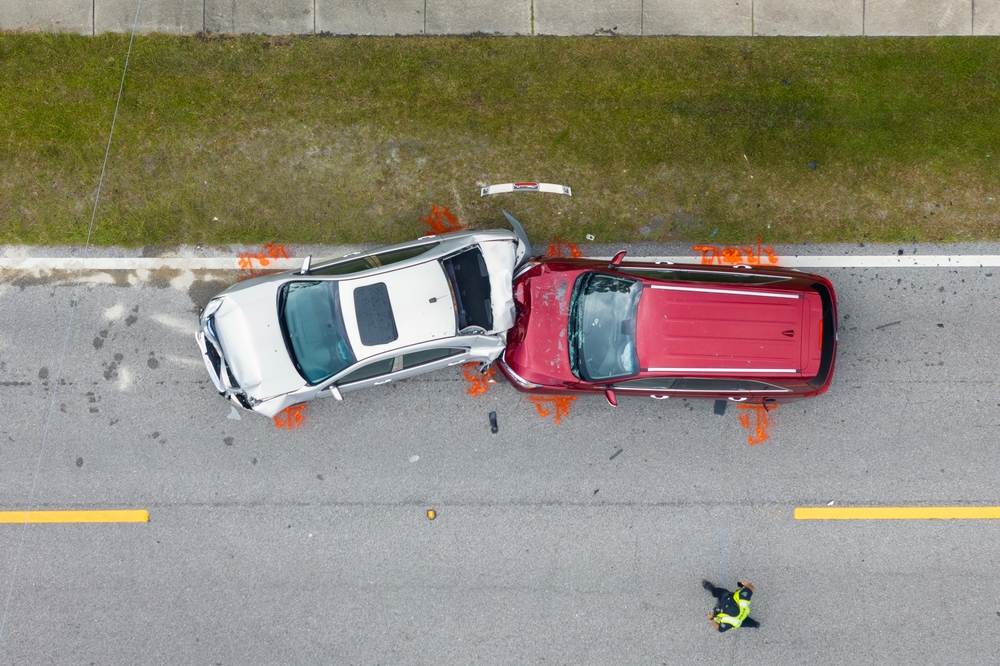
No state agency publishes a public crash count for individual Columbus streets, so local risk has to be read through road design, traffic mix, and the crash reports themselves. MDOT tracks crash locations for engineering purposes, and the Mississippi Department of Public Safety makes individual collision reports available to the people involved.
That gap between statewide data and street-level data is exactly why anyone reading a list of "deadliest intersections" online should be skeptical. Most of those lists are assembled from news coverage rather than crash records, so they measure attention rather than danger. We would rather tell you what we actually see.
In our Lowndes County cases, the collisions that produce catastrophic injuries tend to share a small set of features:
- A vehicle moving at highway speed meets a vehicle that is turning, slowing, or crossing the highway.
- A commercial truck is involved, which multiplies the force delivered to a passenger car.
- The crash happens on a stretch with limited lighting, a narrow shoulder, or no median barrier.
- Drunk driving plays a role, most often between late evening and early morning.
None of those features causes a crash by itself, but together they explain why two collisions at the same speed can end so differently. That is also why we investigate the road, and not only the drivers.
Which Roads in Columbus Carry the Most Risk?
The corridors that move the most traffic through Columbus also produce the most severe crashes, and three names come up constantly: U.S. 45, U.S. 82, and Highway 182. Each one creates conflict in a different way, so the injuries they produce look different too.
U.S. 45 and the Air Force Base Corridor
U.S. 45 runs north to south through Lowndes County as a divided four-lane highway, carrying commuters toward Columbus Air Force Base alongside long-haul freight. Traffic moves fast, and side roads, driveways, and farm equipment feed directly onto it. Speed differential is the core problem.
Crashes on this corridor often involve a driver who slowed to turn and a following driver who did not expect it. At dawn and dusk, deer and reduced visibility add another layer of risk.
U.S. 82 and the Interchange East of Town
From Starkville east to the Alabama state line, U.S. 82 is built to freeway standards and posted at 70 mph outside the Columbus city limits. It interchanges with U.S. 45 near Columbus and carries steady truck traffic toward Tuscaloosa. Merging, weaving, and sudden slowdowns near the interchange create the highest-energy collisions in the county.
The severity here comes from physics rather than carelessness alone. A rear-end impact at 70 mph transfers roughly twice the energy of the same impact at 50 mph.
Highway 182 and Main Street
Highway 182 follows the old route of U.S. 82 straight through Columbus, past storefronts, driveways, and closely spaced traffic signals. It runs near downtown, Mississippi University for Women, and the historic district around Friendship Cemetery. Speeds are lower, but conflict points are everywhere.
Left-turn and rear-end collisions dominate here. They rarely make the news, and they still send people to Baptist Memorial with herniated discs, concussions, and shoulder injuries that take a year to resolve.
Alabama Street, Military Road, and Bluecutt Road
These local connectors link neighborhoods to the shopping corridor around Leigh Mall, and they mix through traffic with constant turning movements. Pedestrians crossing to reach parking lots and bus stops face real exposure, particularly after dark. A person hit by a vehicle in Columbus at 30 mph has a far better chance of survival than one hit at 40 mph, which is why posted speeds on these streets matter more than drivers assume.
No road creates a wreck on its own, and no list of corridors can predict where the next one happens. What these stretches share is a design that puts drivers into conflict more often than most, so extra patience on them genuinely pays.
Why Are These Columbus Roads So Dangerous?
The primary reason is speed differential, meaning the gap between how fast one vehicle is moving and how fast another one is moving in the same space. When a highway carries 70 mph traffic and also allows cars to turn across it from a driveway, the road is asking drivers to solve a problem physics does not forgive. Several local factors sharpen that problem in Columbus:
- At-grade intersections and private driveways placed along high-speed U.S. highways.
- Heavy commercial truck volume tied to the Tennessee-Tombigbee Waterway industrial corridor and Alabama-bound freight.
- Limited lighting and narrow shoulders on rural approaches into the city.
- Frequent turning movements and short signal spacing on older arterials such as Highway 182.
- Severe spring thunderstorms that cut visibility and reduce tire grip within minutes.
Engineers can address several of these conditions with turn lanes, lighting, and median treatments, and MDOT has done so in places. When a known hazard goes unaddressed for years, that history becomes part of the story we tell about a crash.
How Mississippi Fault Rules Affect a Columbus Car Accident Claim
Mississippi follows a pure comparative negligence rule, which means a driver who was partly at fault can still recover money. Under Mississippi Code Section 11-7-15, a jury reduces damages in proportion to the injured person’s share of the fault rather than throwing the claim out. Someone found 20 percent responsible for a wreck with $100,000 in damages would recover $80,000.
This rule matters more than most people realize, because it changes how insurance companies behave. Every percentage point of blame an adjuster shifts onto you lowers what the insurer pays. Adjusters know this, and their questions are shaped by it.
Timing matters too. Mississippi Code Section 15-1-49 gives most injury claims three years from the date of the crash to reach court. Claims involving a city, county, or state road authority run on a different and shorter track under the Mississippi Tort Claims Act.
Nothing here is legal advice about your situation, and deadlines can shift based on facts we would need to review. The safest move is to ask someone to look at the specifics before a clock runs out on you.
What Evidence Helps Prove Fault on a High-Risk Road?

The evidence that decides these cases is usually the evidence that disappears fastest. Skid marks fade within weeks, surveillance footage overwrites itself in days, and vehicles get repaired or scrapped before anyone downloads their data. Specifically, we move early to preserve:
- The official Mississippi crash report and the responding officer’s scene notes.
- Photographs of skid marks, debris fields, sightlines, and any obstructed signage.
- Traffic camera footage and surveillance video from nearby businesses.
- Event data recorder downloads showing speed, braking, and steering in the seconds before impact.
- Driver logs, dispatch records, and maintenance files when a Columbus commercial truck was involved.
- Prior crash history at the same location, which can show a hazard was known.
Gathering that record takes a formal preservation letter and, sometimes, a court order. The sooner that work starts, the more of the story survives.
How Our Columbus Car Accident Lawyers Help
We built this firm around one idea: our roots run deep with the communities we serve, and our care for you resides beyond the courtroom. Richard Schwartz & Associates Injury Lawyers, P.A. has represented injured Mississippians for more than 40 years, and we have recovered over $1 billion for the people who trusted us with their cases. Attorneys and Practice Magazine has ranked our firm among the top personal injury firms in the state.
What that means in practice is straightforward. We investigate the road and the driver, we handle the insurance company so you do not have to, and we tell you honestly what your claim is worth rather than what you want to hear.
Our Columbus office serves Lowndes County and the wider Golden Triangle, and we are reachable 24/7. The case evaluation costs nothing, and we offer pro bono services to families who need them. Call our Columbus team at (662) 370-3002 whenever you are ready to talk.
FAQs about Car Accident Statistics and High-Risk Roads in Columbus, MS
Below are the questions Columbus drivers ask us most often after a collision, along with plain answers.
How long does a car accident claim usually take in Columbus?
It depends almost entirely on medical treatment. A claim cannot be valued accurately until doctors understand how much recovery a person will make, so straightforward cases may resolve in a few months while serious injury claims often take a year or longer. Rushing a settlement before that point tends to cost people money.
Do I have to give the other driver’s insurance company a recorded statement?
No. You are required to cooperate with your own insurer under your policy, but you have no obligation to give a recorded statement to the other side. Those statements are frequently used later to argue that you contributed to the crash.
What happens if the driver who hit me had no insurance?
Your own uninsured or underinsured motorist coverage may step in and pay. Mississippi requires insurers to offer this coverage, and many drivers carry it without realizing it. Reviewing your policy declarations page is the first step.
Can I still recover damages if I was not wearing a seat belt?
Often yes. Mississippi law limits how much a defendant can use seat belt evidence against an injured person, and pure comparative negligence means partial fault reduces a recovery rather than eliminating it. The specific facts control the outcome.
Who pays my medical bills while my claim is pending?
Health insurance, medical payments coverage under your auto policy, or arrangements with treating providers usually cover treatment in the meantime. The at-fault driver’s insurer typically pays nothing until the case resolves. Keeping every bill and record makes reimbursement cleaner later.
Does the police report decide who was at fault?
It carries weight, and it does not decide the question. Officers reconstruct events after the fact and sometimes get details wrong, so reports can be challenged with physical evidence, video, or witness testimony.
What if a road defect or missing traffic control contributed to my wreck?
Then a government entity may share responsibility, and a separate set of rules applies. These claims carry shorter notice deadlines and immunity defenses, which is why they need attention right away rather than at the end of a three-year window
Talk With a Columbus Car Accident Lawyer Today

You did not choose the road that hurt you, and you should not have to carry what came next alone. If you were injured on U.S. 45, U.S. 82, Highway 182, or any street in Lowndes County, we want to hear what happened to you. We understand what these injuries do to a household, and we are here to listen.
Call our Columbus office at (662) 370-3002 for a free case evaluation, any hour of any day. Your fight is our fight, and we are ready to start it with you.