
If a crash on the open road left you hurt, you deserve clear answers, not confusion. At Richard Schwartz & Associates Injury Lawyers, P.A., we help riders understand how Mississippi's motorcycle helmet law connects to a Columbus motorcycle accident claim. Our goal here is to explain the rules in plain language, so you can focus on healing while we focus on your case.
Motorcycle riders in Mississippi carry a heavy load after a wreck, from mounting medical bills to lost paychecks. Many riders worry that a single helmet question will sink their claim before it even starts. We wrote this guide to clear up that worry, and to show how the law actually works for you.
You did not choose to be hurt, and you should not have to face the insurance system alone. Think of this as your plain-English map to the helmet law and your rights as a rider.
What Does Mississippi's Motorcycle Helmet Law Mean for Your Columbus Accident Claim?
You can still file a Columbus motorcycle accident claim even if you were not wearing a helmet, as long as another driver caused your crash. Mississippi's motorcycle helmet law requires every rider to wear head protection, yet that rule does not erase your right to seek compensation when someone else was at fault.
Key Takeaways about Mississippi’s Universal Helmet Law
- Mississippi has required all motorcycle riders and passengers to wear a helmet since 1974, making it one of the earliest universal helmet laws in the country.
- The helmet must meet federal DOT safety standards under Mississippi Code Section 63-7-64.
- Riders can still pursue a Columbus motorcycle accident claim even if they were not wearing a helmet at the time of the crash.
- Under Mississippi's pure comparative fault rule, a missing helmet may reduce certain damages only when it worsened a head injury.
- The fault of the driver who caused the crash remains the central issue in most motorcycle injury claims.
What Is Mississippi's Universal Motorcycle Helmet Law?
Mississippi's universal motorcycle helmet law requires every person on a motorcycle or motor scooter to wear a crash helmet that meets federal safety standards. This rule lives in Mississippi Code Section 63-7-64, and it has protected riders since 1974. Mississippi stands among the earliest states to put a rule like this on the books.
The word universal matters here. The law applies to all riders and passengers, no matter their age or experience. There is no adult exemption, so a 50-year-old rider must follow the same rule as a teenager.
Specifically, the helmet law comes down to a few clear points:
- Who it covers: every operator and every passenger on a motorcycle or motor scooter.
- What counts: a helmet that meets the federal DOT standard known as FMVSS 218.
- The narrow exception: riders 18 and older in a parade traveling no faster than 30 miles per hour.
In short, if you ride on a public road in Mississippi, you wear a helmet, and that helmet must be the real thing.
The law also reaches beyond full-size motorcycles. It covers motor scooters, too, so lighter two-wheelers face the same helmet rule. Lawmakers built this protection to reduce the severe head injuries that so often follow a crash.
Does Not Wearing a Helmet Affect Your Columbus Accident Claim?
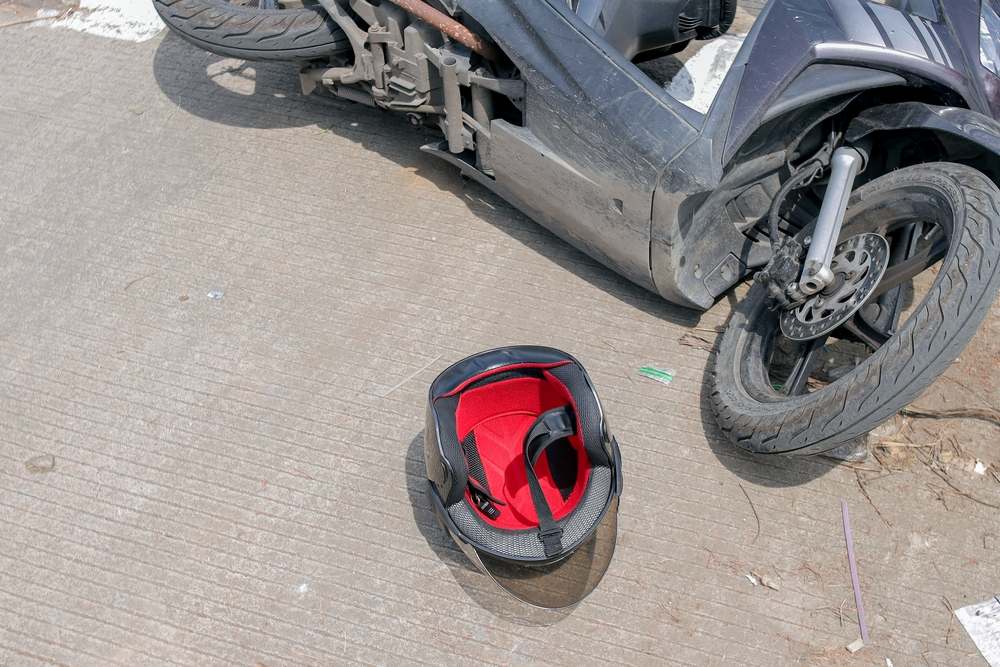
Not wearing a helmet does not bar your Columbus accident claim, though it can lower certain damages if it made a head injury worse. Mississippi follows a rule called pure comparative fault, found in Mississippi Code Section 11-7-15. Under this rule, your own share of fault reduces your recovery, but it never wipes it out.
Here is what that looks like in practice. If another driver ran a red light and hit you, that driver's carelessness caused the crash, not your helmet choice. A missing helmet only enters the picture when a head injury would have been less severe with one on.
The primary reason this matters is simple. If you broke your leg because a driver turned in front of you, a helmet has nothing to do with that injury. Insurance companies sometimes try to blur this line, so we push back with medical records and clear facts.
Timing helps here as well. The sooner we document your injuries, the harder it becomes for anyone to pin your harm on a helmet instead of the crash. We move quickly to lock down the facts while they are still fresh.
We want riders to know one thing above all. A helmet question is a detail in your case, not the end of it.
How Mississippi's Comparative Fault Rule Protects Riders
Mississippi's comparative fault rule lets injured riders recover money even when they share part of the blame for a crash. The law reduces your award by your percentage of fault, and nothing more. Even a rider found mostly at fault can still recover something.
Consider a rider assigned 20 percent of the fault for a wreck. In that case, the rider still recovers 80 percent of the total damages. Some states cut off recovery once your fault crosses a set line, but Mississippi does not.
In contrast, this approach gives injured riders real breathing room. You do not have to be a flawless rider to hold a valid claim. You only need another party who shares responsibility for your harm.
That is why we look closely at every factor in a crash, from a distracted driver to a poorly marked lane. The goal is to show the full story, so fault lands where it belongs.
This rider-friendly rule reflects a basic idea of fairness. Real crashes rarely fit into neat boxes, and blame is seldom all or nothing. Mississippi law makes room for that reality.
How a Motorcycle Claim Differs from a Car Claim
A motorcycle claim differs from a car claim in one big way: bias. Some drivers and insurers wrongly assume a rider was reckless, simply because they were on a bike. We work to replace that assumption with facts.
Motorcycle crashes also tend to cause heavier injuries, since a rider has no metal cage for protection. That often means larger medical bills and longer recoveries, which insurers may resist paying. Our job is to show the true cost of your injuries.
We also gather proof that car-focused adjusters often miss, from gouge marks on the road to damage on your riding gear. These details can reveal how a driver failed to yield or misjudged your speed. Strong evidence turns a doubted claim into a solid one.
Choosing a Helmet That Meets the Law
A helmet meets Mississippi law only when it carries a federal DOT certification, so a cheap novelty helmet will not do. The federal safety standard, explained by the National Highway Traffic Safety Administration, sets minimum tests for impact protection and staying power. You can spot a compliant helmet by the DOT label on the outer back.
When you shop for a helmet, look for these signs of a safe, legal choice:
- A DOT certification label on the outer back of the helmet.
- A thick inner liner, usually about an inch, rather than a thin shell.
- A sturdy chin strap held by solid rivets.
- No spikes or decorations that stick out more than a fraction of an inch.
A helmet that checks these boxes protects your head and keeps you on the right side of the law. You can also learn to spot unsafe novelty helmets that fail those federal tests.
Keeping your DOT helmet after a crash can help your case, too. It can serve as physical proof of what you wore, and how the impact occurred. We sometimes use that helmet to show a jury just how hard the hit really was.
How We Help Injured Riders in Columbus
We build motorcycle accident claims by proving another party's fault and tying each injury to the crash, not to a helmet debate. In our four decades of representing injured Mississippians, we have recovered more than $1 billion for our clients. That long track record shapes how we handle every motorcycle case.
Our Columbus team knows the roads you ride. We have seen how crashes unfold along busy corridors like Highway 45 and Highway 82, and near the Tennessee-Tombigbee Waterway. That local knowledge helps us picture how a wreck happened, and who bears responsibility.
When we take a motorcycle case, we gather the police report, medical records, and witness accounts up front. We then use that proof to show exactly how another driver caused your harm. Riders across Columbus, from students near Mississippi University for Women to lifelong locals, have trusted us to stand up for them.
We also counter the helmet argument head on. If an insurer points to your gear, we connect each injury to the crash itself, so a leg fracture or internal injury never gets brushed aside over a helmet question.
We know how much your bike and your independence mean to you. Our promise is steady communication, honest guidance, and a team that treats your case like it is our own. You will always know where your claim stands.
What Injuries Do Motorcycle Riders Often Suffer?
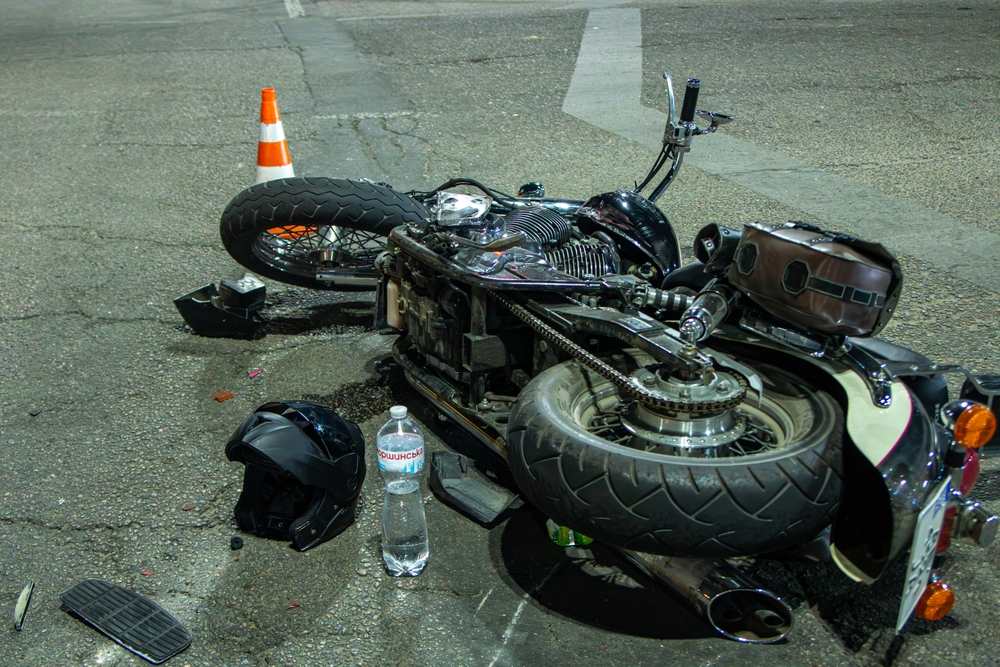
Motorcycle riders often suffer serious injuries because a bike offers little protection in a crash. A rider can be hit by a vehicle and thrown to the pavement in an instant. Even a careful rider in full gear can walk away with lasting harm.
Common motorcycle crash injuries include:
- Traumatic brain injuries, even for riders who wore a helmet.
- Broken bones in the arms, legs, and ribs.
- Road rash and deep skin wounds.
- Spinal cord injuries that limit movement.
- Internal injuries that may not show up right away.
Head injuries deserve special attention, since their effects can surface days or weeks after a crash. A rider may feel fine at the scene, then later face headaches, memory gaps, or mood changes. Careful medical records help connect those symptoms back to the wreck.
A helmet guards the head, yet it cannot prevent every one of these injuries, which is why fault and full medical care both matter so much. We make sure your doctors' findings drive the value of your claim, not an insurer's guesswork.
FAQs about Mississippi’s Motorcycle Helmet Law
Below, we answer common questions riders ask us about helmets, fault, and their rights after a crash.
How long do I have to file a Columbus motorcycle accident claim?
Mississippi generally gives injured people three years from the date of the crash to file a lawsuit, under Mississippi Code Section 15-1-49. Some situations, such as a claim involving a government vehicle, carry a much shorter window of one year. Because these deadlines can shift with the facts, it helps to speak with a lawyer soon after your crash.
Do motorcycle passengers have to wear a helmet in Mississippi?
Yes, Mississippi's helmet law applies to passengers just as it applies to operators. There is no age exemption, so a passenger of any age must wear a DOT-approved helmet on public roads. This rule keeps every person on the bike better protected.
What is the penalty for riding without a motorcycle helmet in Mississippi?
Riding without a proper helmet counts as a traffic offense in Mississippi. A first violation can bring a fine of up to $100 or up to 10 days in jail. The bigger cost, though, is the added risk of a severe head injury.
Does Mississippi's helmet law apply to motor scooters?
Yes, the helmet law covers both motorcycles and motor scooters on public roads. The same DOT helmet standard applies to riders of either vehicle. If you ride a scooter on Mississippi streets, plan to wear a compliant helmet.
What if I lost a loved one in a motorcycle crash?
We understand that no claim can fill the space a loved one leaves behind. A Columbus wrongful death claim is not about money for its own sake; it is about justice and the resources your family needs to move forward. We handle these cases with care, and we treat every family the way we would want our own treated.
Do I need a lawyer to file a Columbus motorcycle accident claim?
You are not required to hire a lawyer, yet strong legal help often makes a real difference. Insurance companies review motorcycle claims closely, and they may point to your helmet or your riding to lower a payout. We stand between you and those tactics, so you can focus on your recovery.
Talk With a Columbus Motorcycle Accident Lawyer Today

You do not have to sort out the helmet law and your claim on your own. Our team at Richard Schwartz & Associates Injury Lawyers, P.A. is ready to listen, answer your questions, and fight for the compensation you deserve. We offer a free case evaluation, and we are available 24/7 whenever you need us.
If a crash left you or someone you love hurt in Columbus, reach out today. Call our Columbus office at (662) 370-3002 for your free consultation, with no fee unless we win. Your fight is our fight, and we are here to stand beside you.